

Liniment: Does it work and which one should you choose?
Mmm, liniment. Sit and think for five seconds—can you catch the scent of something like Tiger Balm or Linnex just by imagining it? If so, it's no surprise; these are some of the most commonly used fragrant products (next to sweaty running shoes) in locker rooms of almost every sport. As soon as someone feels pain or stiffness, out comes the liniment. But does it work? And if so, how?
If you can't be bothered to read the whole article, here's a quick summary: the effect often hinges on the combination of massage, heat/cold signals to the brain, and certain ingredients that can locally reduce pain. Which product feels best is highly individual, so apply it and find out what works for you!
What is the purpose of liniment?
Regardless of which product you choose, the description often reads like this:
“Traditionally used for treating temporary muscle pain or pain from strains and sprains” or “Great for massaging tense and stiff muscles and joints. Quickly and easily absorbed by the skin, making it perfect for professional use.”
The aim is to alleviate pain, boost blood circulation, and relax the muscles.
There are several active ingredients that differ slightly between products/manufacturers, but overall, they function similarly. They all act as softeners, but it's not just the liniment that works. Most people massage the product into the skin, which not only relaxes the muscles but also creates some heat through the friction between the hand and skin as you rub in the ointment. This effect occurs just like when you massage with rapeseed oil or similar products.
Common Active Ingredients
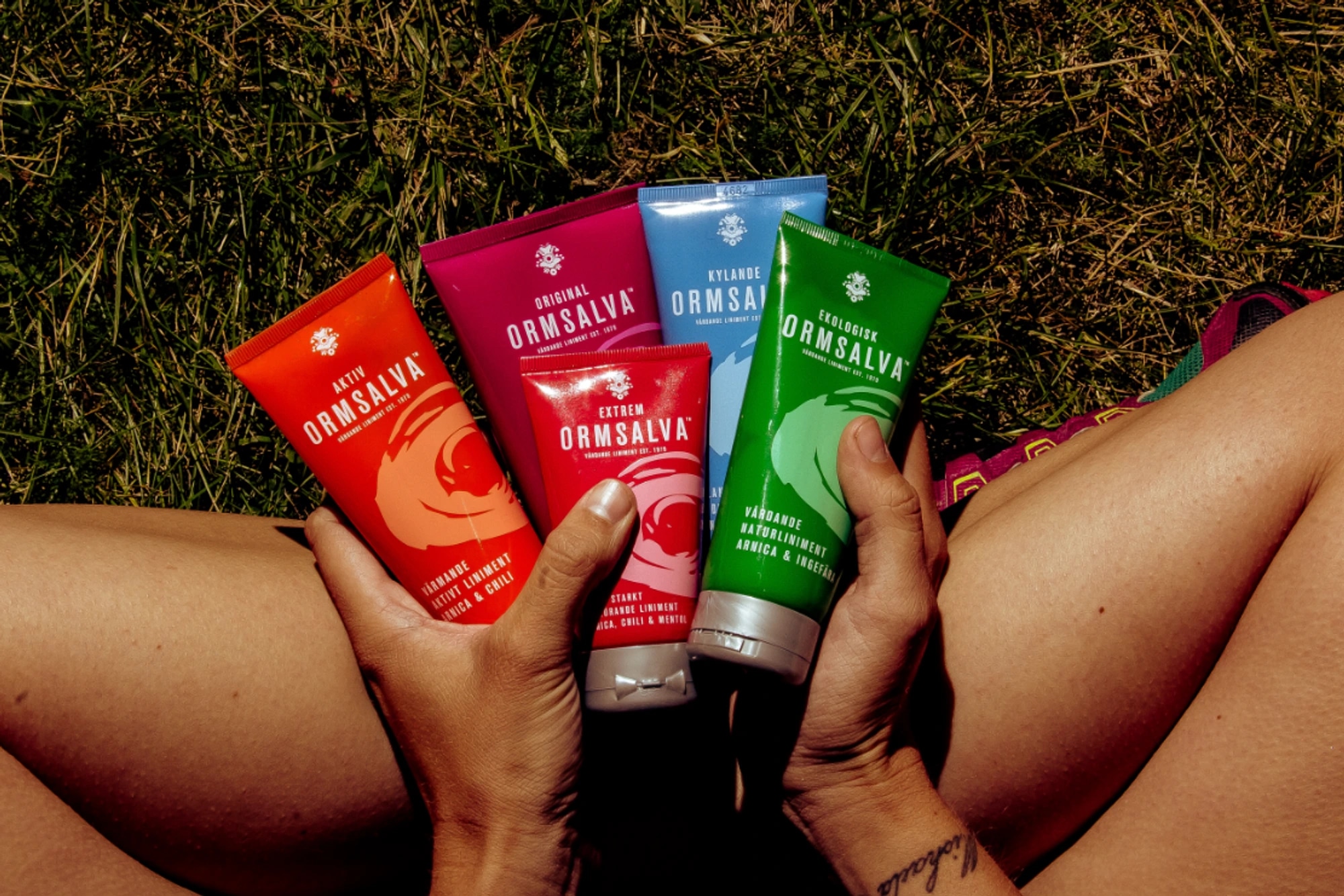
Ormsalva – Variants and Contents
Ormsalva Original (formerly Ormsalva Plus)
Arnica extract 2%, propylene glycol, cetyl stearyl alcohol, sodium cetyl stearyl sulfate, preservatives E216 and E218, ethanol, graphite, water.
The main ingredient in Ormsalva is arnica extract, derived from Arnica montana, known in Swedish as slåttergubbe or hästfibbla. It is an essential oil where the arnica extract has a local vasodilating effect but no pain-relieving effect, not more than placebo at least. It may even be that pain intensifies and worsens with the use of this oil/herb. It is probably included for its vasodilating effect and thereby increased circulation.
Ormsalva Cooling and Ormsalva Active
Ormsalva Cooling with extra menthol provides an icy/cooling sensation, and Ormsalva Active contains both menthol and chili/capsaicin for a warming sensation. They work by activating thermoreceptors in the skin, giving a sensation of cold or warmth. It's not that the skin actually becomes colder from menthol—instead, receptors are activated that perceive it as cold. They send signals that the brain interprets as cold, and you experience a cooling sensation. The same principle applies to capsaicin from chili: it activates receptors that interpret warmth, giving a sensation of heat without necessarily increasing skin temperature.
Ormsalva Active also contains other substances such as sunflower oil and rosemary, which may have some physiological effects, but they are listed further down in the ingredient list and probably act mostly as aromatic components in the ointment.
Ormsalva also has a variant they call Extreme. It contains both chili and menthol, so you should experience a combined hot and cold sensation. Unlike Active, menthol is listed early in the ingredient list here, so it's probably a higher dose and thus a potentially stronger cooling sensation.
Both Active and Extreme contain eucalyptus oil with its active ingredient, eucalyptol (1,8-cineol), which acts as an anti-inflammatory, which can be beneficial if, for example, you've sprained your ankle or have aching, inflamed muscles.
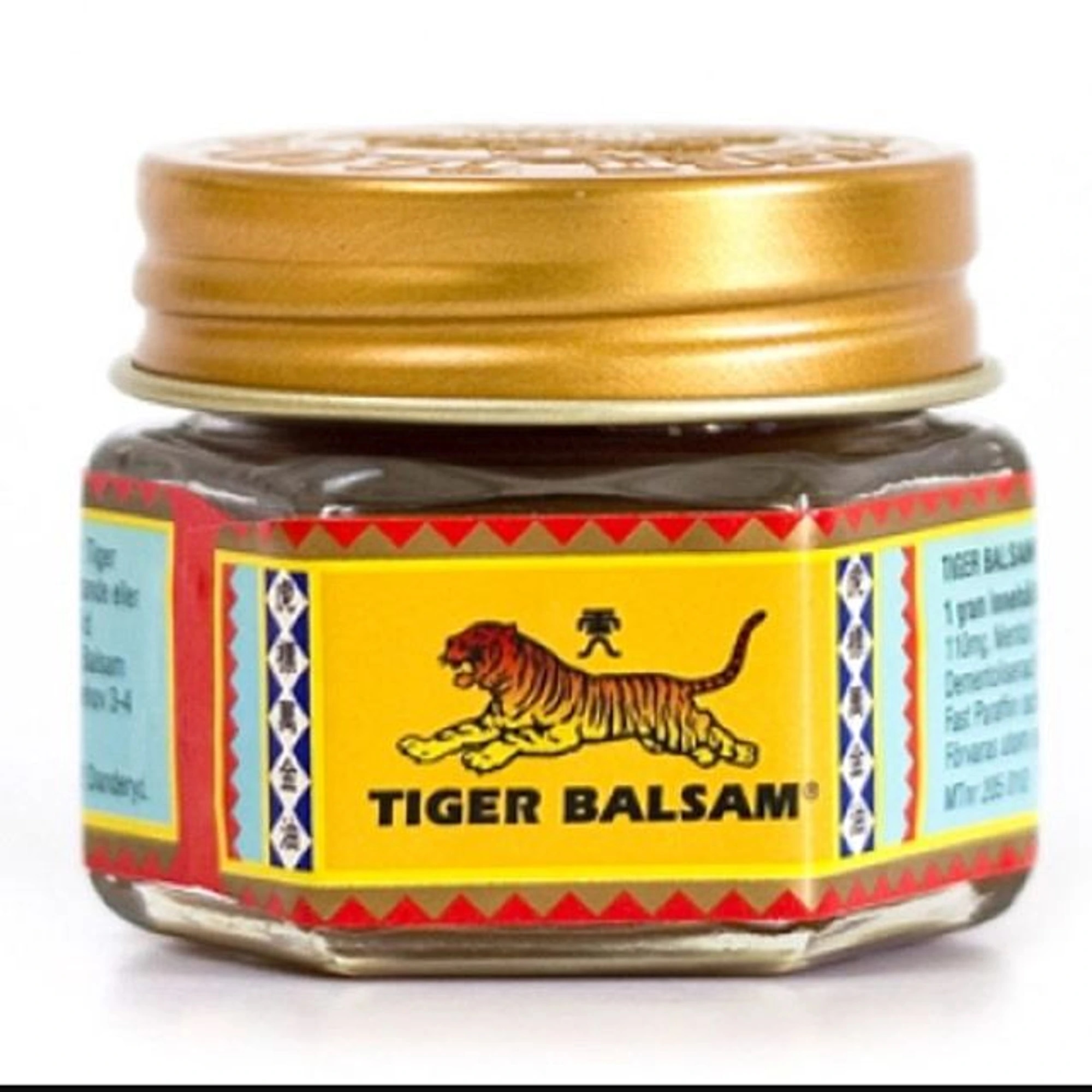
Tiger Balm – Red vs White
Tiger Balm Red: Camphor 110 mg, menthol 100 mg, cajeput oil 70 mg, dementholized mint oil 60 mg, clove oil 50 mg.
Tiger Balm White: Camphor 110 mg, menthol 80 mg, cajeput oil 130 mg, dementholized mint oil 160 mg, clove oil 15 mg.
It bears a resemblance to Ormsalva but with some important distinctions. Tiger Balm also contains cajeput oil, an oil from the cajeput tree, which has been shown in a few studies to have pain-relieving and anti-inflammatory effects. The oil inhibits COX-2, consequently reducing the production of prostaglandins. Prostaglandins enhance pain signals in the body, so inhibiting them decreases perceived pain. This is the same mechanism as many common pain-relief drugs, such as ibuprofen, which also acts as a COX inhibitor.
Camphor, the primary ingredient in Tiger Balm, is quite fascinating. Camphor acts as a "sensation enhancer." When combined with menthol or capsaicin, which creates a sensation of cold or heat, it amplifies the perceived effect. Camphor also has some pain-relieving effects. Several deaths have been reported from the larger intake of camphor oil; it can be toxic in high doses. Toxic effects in humans can begin around a 2 g intake, becoming more serious at higher doses (depending on body weight and age).
“Toxic effects may follow a pattern of CNS stimulation (delirium, seizures) followed by depression (lack of coordination, respiratory depression, coma (Budavari 1989)). Neurologic symptoms can include anxiety, depression, confusion, headache, dizziness, and hallucinations (Siegel & Wason 1986; Committee on Drugs 1994). Initial symptoms of camphor toxicity may begin within 5 to 15 minutes of ingestion. Camphor presents a clear risk to humans, even from non-oral exposure in the case of infants.”
In Tiger Balm, the amount is 110 mg of camphor per gram of ointment, so using the entire jar of 20 g, you just exceed the limit with 2 g of camphor and might begin to experience toxic effects. However, it's unlikely you'd apply an entire jar at once.
Tiger Balm also includes oil based on clove, which has also demonstrated some anti-inflammatory and pain-relieving effects, primarily in animal studies but also in humans in some studies.
The oil from clove, and arnica in Ormsalva, has been shown to activate TRP channels as discussed in our article on “New Research on Cramps.” Clove can also give a cooling sensation on the skin and thereby reduce perceived pain, at least in animal studies. At a sufficient dose, this can very well apply to humans.
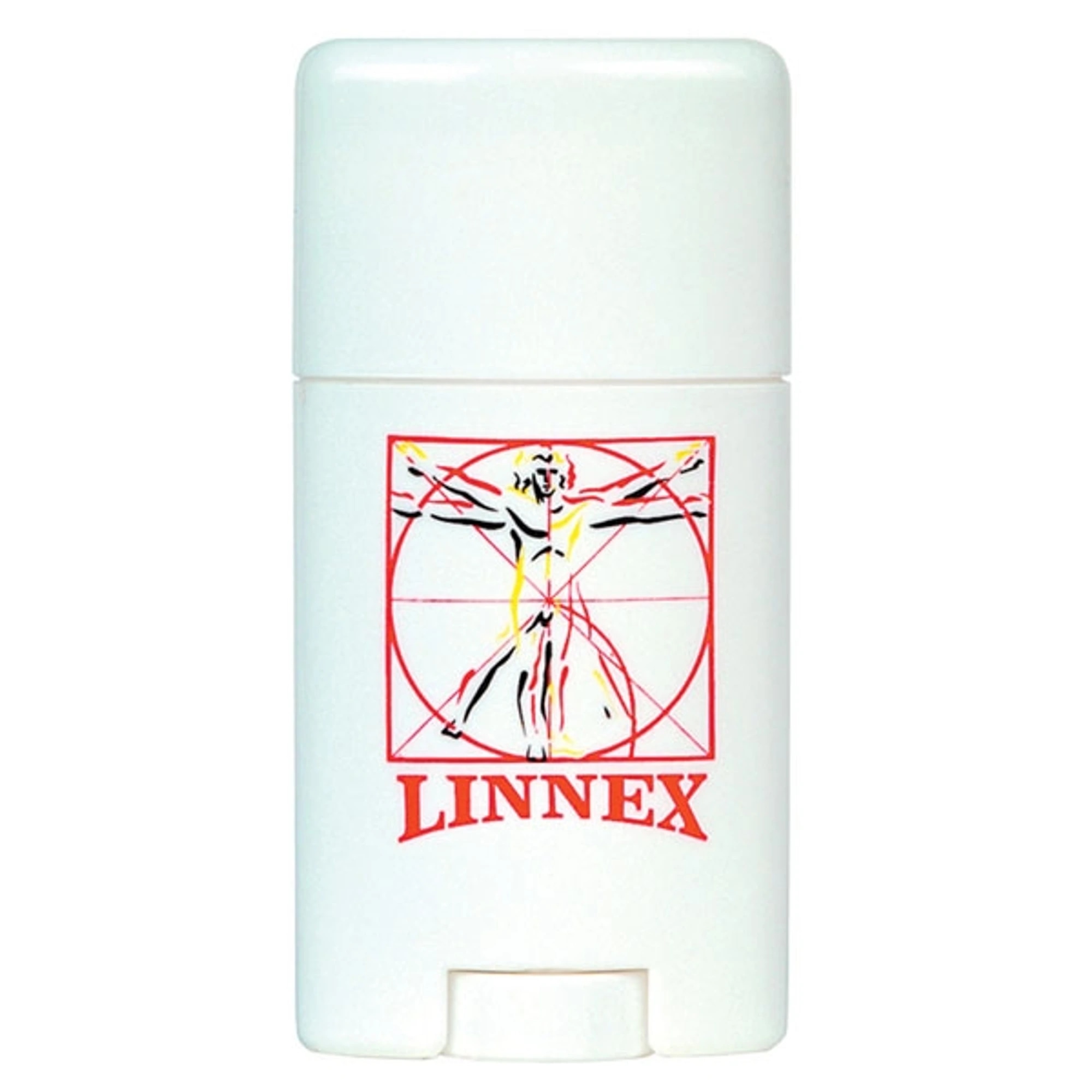
Linnex – What Makes It Unique?
Linnex includes similar types of ingredients found in other liniments, such as menthol, capsaicin, and camphor. Lavender oil is another essential oil with some antiseptic properties and pain-relieving effects used in childbirth in certain studies. In those cases, lavender is boiled in water to create "lavender steam" which the laboring person inhales; this is a form of aromatherapy, often experienced at a spa.
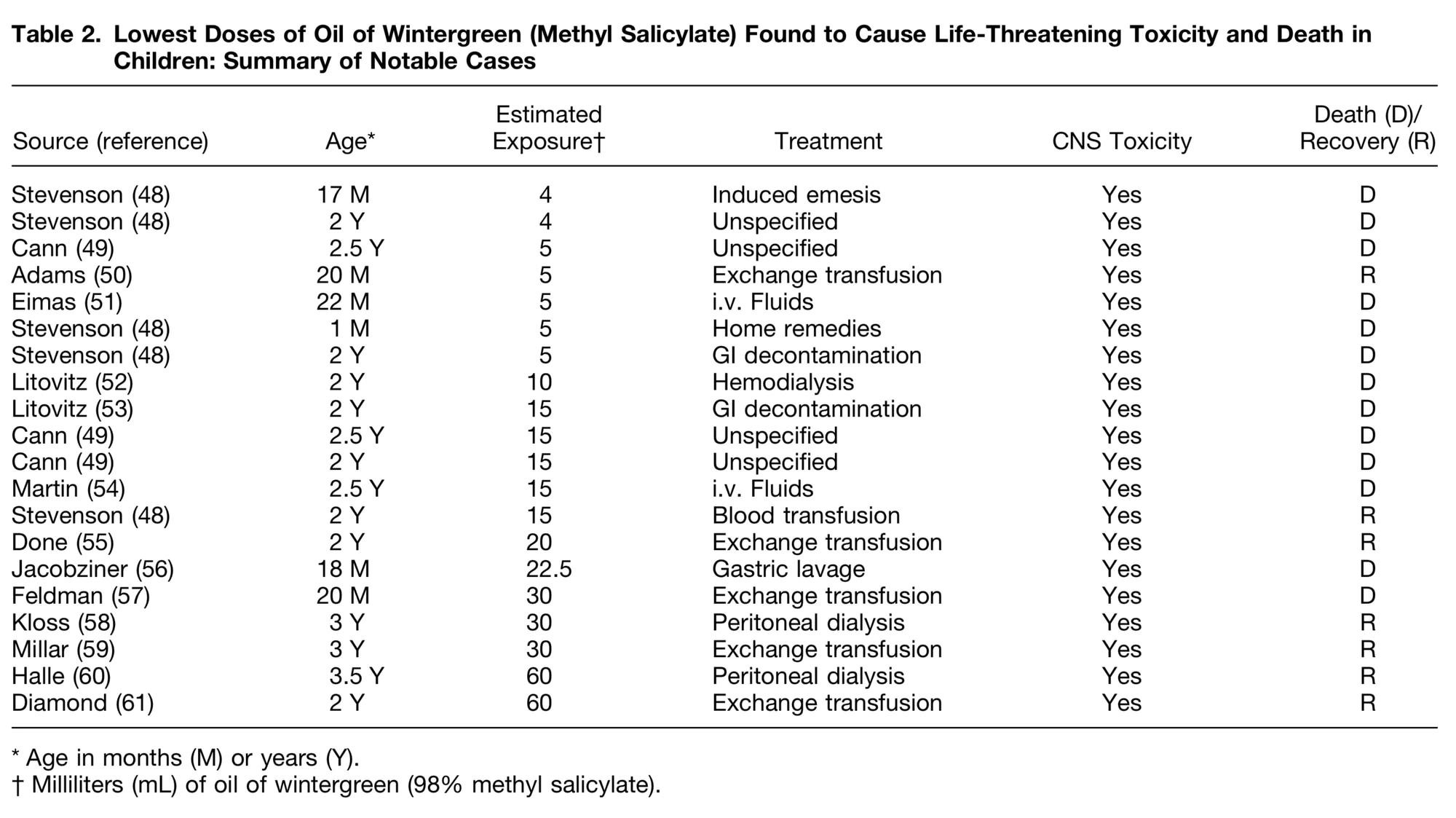
Linnex, similar to Ormsalva Aktiv, also contains salicylate as ethyl salicylate and glycol salicylate. These active ingredients possess local pain-relieving effects. However, they can be a bit tricky, as a product can contain a maximum of 5 percent of this substance before it's classified as a drug (at least in the USA). The substance can be extracted from wintergreen, and pure oils can be very strong. If you make oil from pure wintergreen, there's a high risk of problems, even death (see table below). Fortunately, the doses in these liniments are lower and controlled. Wintergreen is not something you should handle on your own, despite how "natural" it sounds.
“Among the most potentially devastating forms of methyl salicylate is oil of wintergreen, which is approximately 98% methyl salicylate. It is a highly potent liquid, as just 1 mL of oil of wintergreen is equivalent to 1400 mg of aspirin (4). In other terms, one teaspoon (5 mL) of oil of wintergreen contains the equivalent of approximately 7000 mg of aspirin. Given that a routine adult tablet contains 325 mg of aspirin, a mere teaspoon of this potent toxin is toxicologically similar to ingesting nearly 22 adult aspirin tablets (5)”
Which liniment works best in practice?
All liniments contain ingredients that operate based on the Gate Control Theory. In short: the brain can't process too many signals from different sensory nerves at the same time. When we get pain signals from one source and simultaneously receive input from thermoreceptors (feelings of cold or warmth), the brain interprets all these signals collectively. With multiple inputs arriving at once, no single input gets "all the focus," so the pain often feels less intense than if the pain signal was received alone. That's why we don't feel as much pain if there’s also a cold or warm sensation. These ointments simply trick the brain slightly—the same trick as holding something cold to distract from pain (kalla-hander/).
Tiger Balm and Linnex, which include camphor, are often considered somewhat more effective in many cases. However, it’s always a matter of dosage-response, and since only Tiger Balm specifies the amount of each ingredient, it's practically challenging to make a completely fair comparison between brands.
We've heard many positive reports about Linnex. It could be due to a specific ingredient or the combination of ingredients, but it might also be because Linnex is available in stick form—the stick is harder, so you apply it with more mechanical pressure, potentially activating more mechanoreceptors (Gate Control theory again). Therefore, part of the effect could simply be mechanical.

Conclusion
All of them seem to have ingredients that can contribute to pain relief in one way or another. Those with more menthol or capsaicin provide a stronger cooling or warming sensation and might therefore relieve more pain. The conclusion is: experiment and find out what works for you.
If you want to experiment practically, you can mix 50 percent Ormsalva Aktiv with 50 percent Tiger Balm Red to include most of the ingredients. Whether it will be better is impossible to say, because just like that you only have half the dose of each product's active substances (for example, cajuput oil).
We humans don't have an identical number of receptors for cold, heat, or pressure in the skin. This means one person might experience the burning or cooling sensation as more intense than another. Considering the individual differences between us, it's even harder to say which product is best for you. No liniment is magical—the same effect can often be achieved with other local, pain-relieving ointments. What you want to use is up to you.
Hopefully, you won't have to use any :)