
Things to consider when exercising in the cold
|
3.5 min reading
It has hardly escaped anyone that winter came early this year. Snow and sub-zero temperatures provide us with fantastic opportunities for skiing, long-distance skating, and beautiful runs through the snow. However, the cold also places certain demands on our bodies, and it's good to be aware of some risks to prepare oneself optimally.
During the winter months, we experience a period when it really freezes down into the throat and lungs as you breathe in the cold winter air. You have likely seen articles about training in the cold circulating online. We won't repeat everything that's already been written, but simply summarize some of the risk factors that increase when you train in sub-zero temperatures, as well as what you can do to still enjoy wonderful outdoor training this winter.
So first, let's clarify the most obvious point: dress warmly enough to avoid frostbite on your skin. The layering principle works excellently and is very useful if you find it warmer than you initially thought, allowing you to simply remove a layer. Don't forget a hat and gloves.
During the winter months, we experience a period when it really freezes down into the throat and lungs as you breathe in the cold winter air. You have likely seen articles about training in the cold circulating online. We won't repeat everything that's already been written, but simply summarize some of the risk factors that increase when you train in sub-zero temperatures, as well as what you can do to still enjoy wonderful outdoor training this winter.
So first, let's clarify the most obvious point: dress warmly enough to avoid frostbite on your skin. The layering principle works excellently and is very useful if you find it warmer than you initially thought, allowing you to simply remove a layer. Don't forget a hat and gloves.
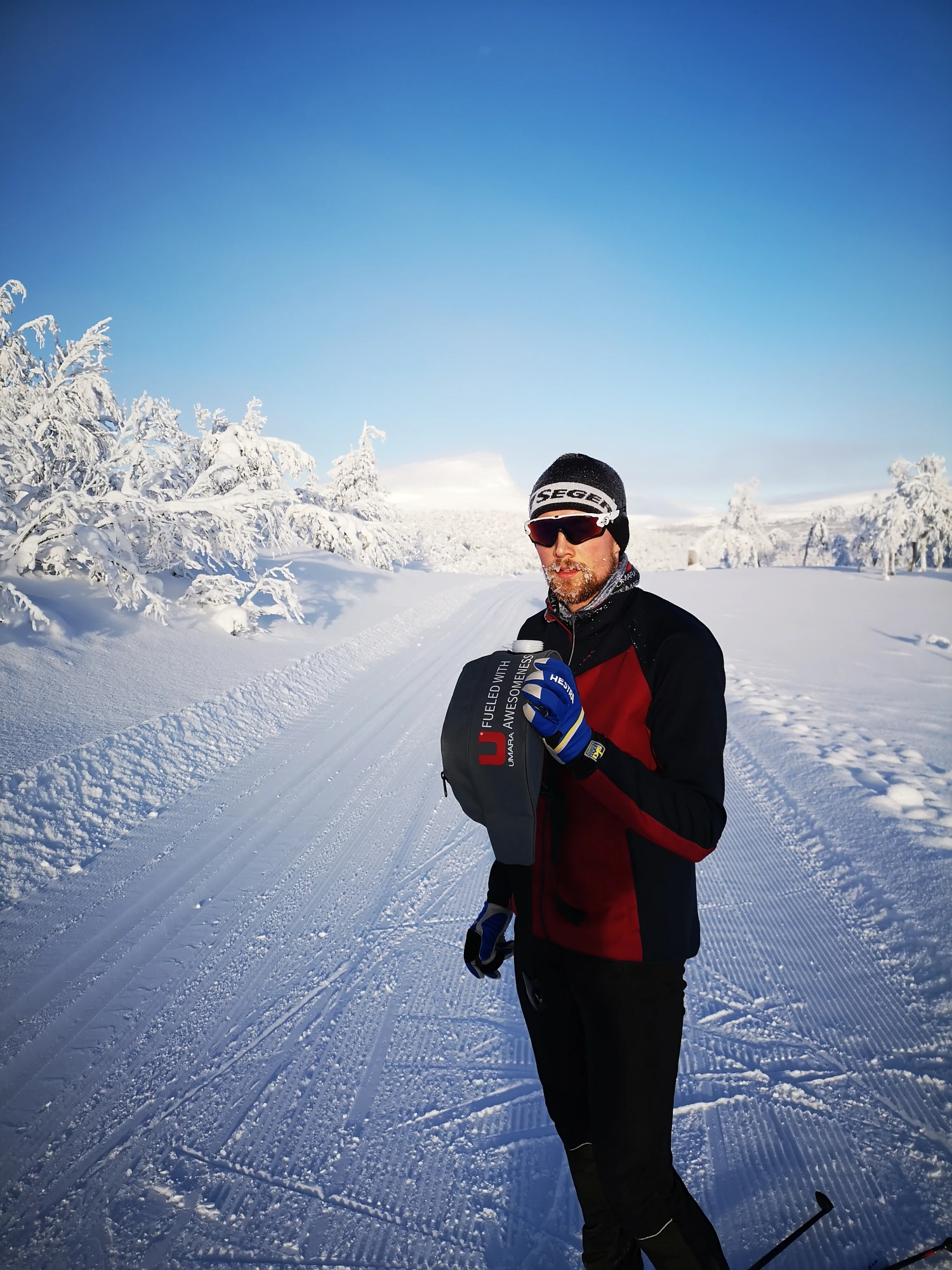
When you look at your thermometer, also consider the wind chill factor. -10 degrees with 11m/s wind gives a wind chill equivalent to -17. It's worth keeping in mind before you leave the warm comfort of home.
Here is a temperature chart borrowed from Runners World that we hope can help.
Wind speed – Temp (degrees below zero)
0 m/s – 0 5 10 15 20 25
7 m/s – 2 7 12 17 23 28
11 m/s – 11 17 25 32 38 45
16 m/s – 18 26 34 42 49 57
20 m/s – 19 28 36 43 52 59
Here is a temperature chart borrowed from Runners World that we hope can help.
Wind speed – Temp (degrees below zero)
0 m/s – 0 5 10 15 20 25
7 m/s – 2 7 12 17 23 28
11 m/s – 11 17 25 32 38 45
16 m/s – 18 26 34 42 49 57
20 m/s – 19 28 36 43 52 59
3 risk factors that you should be aware of when training in the cold
- The risk of Achilles tendinitis increases significantly as the lubricant in the tendon membranes becomes more viscous in freezing temperatures, friction increases, and the likelihood of problems rises. So make sure to warm up properly. This certainly applies to all tendons in the body, but whether you are running or skiing, the Achilles tendon is the one that is most stressed, and the risk is of course higher there.
- The risk of exercise-induced asthma and constricted airways increases when the breathing rate rises during training, thereby increasing cold stress in the airways. If it is really cold and you know you are sensitive, it can be good to use a heat exchanger.
- The risk of inflammation in the airways increases when the winter air is dry (the colder air does not hold as much moisture) while your exhaled breath transports out heat and water from the airways. The result is a somewhat less hospitable, dry, cold environment in the airways that increases the risk of inflammation and potentially irreversible changes in the bronchi. So if it is very cold and you are planning to do high-intensity workouts/intervals, it might be smart to train indoors on a treadmill or trainer instead.
This absolutely does not mean that you should avoid training in the cold; however, it is good to be aware that certain risks increase when you are skiing, running, jumping in a sack, or engaging in a high-intensity snowball fight in the chilly winter air.
If you are out working on your skiing technique or just accumulating miles at a slower pace, you can always bring something warm to drink. The body still loses fluid during training in the cold, and of course, you consume energy even during the winter months. So, make sure to refuel with energy during the outing if you are out for an extended period. As a recreational athlete, you can always do a two-in-one and bring a thermos with hot chocolate to get both energy and warmth if you are just training gently and don’t have performance as the main focus.
In terms of food, most things that don’t freeze solid work well. Energy bars, raisins, fruit, etc. Just open the pantry and do an inventory.
If you are out working on your skiing technique or just accumulating miles at a slower pace, you can always bring something warm to drink. The body still loses fluid during training in the cold, and of course, you consume energy even during the winter months. So, make sure to refuel with energy during the outing if you are out for an extended period. As a recreational athlete, you can always do a two-in-one and bring a thermos with hot chocolate to get both energy and warmth if you are just training gently and don’t have performance as the main focus.
In terms of food, most things that don’t freeze solid work well. Energy bars, raisins, fruit, etc. Just open the pantry and do an inventory.