
Carbohydrate intake for a Grand Tour cyclist (How do Pogačar & Vingegaard manage?)
|
3.5 min reading
The majority of the CHO consumed (CHO during the stages excluded) was ingested post-race, i.e., immediately after the stage and at dinner. This contrasts with a similar study, where breakfast accounted for the largest share of CHO. What is most optimal is difficult to determine, and an explanation for the differences could be individual and cultural preferences regarding which meal of the day is typically the largest. For an insight into this year's tour, you can check out this article from Velo.
If you want to read more about energy needs and power, check out Prestera Mera's article: #120 How do more Calories provide more Watts in the pedals?
Summary
So to answer the question of how Pogačar & Vingegaard manage their extreme performances, the answer is that by calculating and carefully measuring how much load and energy is expended, they can tailor their intake and avoid going low on glycogen both before, during, and after stages. This is while maintaining weight, as not all days are treated equally.If you want to read more about energy needs and power, check out Prestera Mera's article: #120 How do more Calories provide more Watts in the pedals?
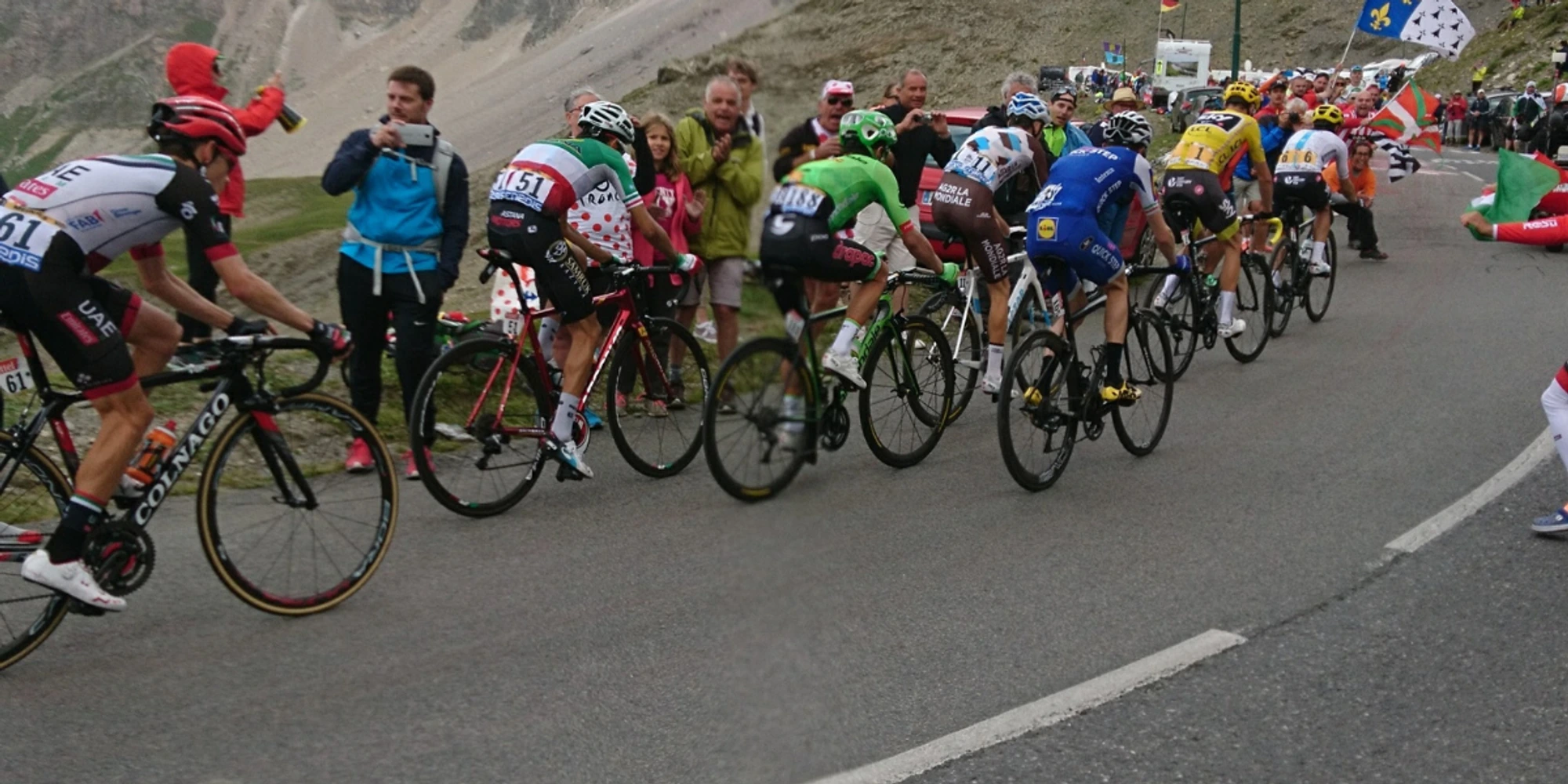
The Tour de France has just finished and what a race it was with breathtaking numbers, especially from Pogačar and Vingegaard. To be able to push 7w/kg in certain climbs (mind blown), a lot of energy is required. But how much do they actually consume during the stages?
Unfortunately, we do not have Tadej's private food diary, but in 2022 a case study (CHO periodisation in cycling Case Study: The application of daily carbohydrate periodisation throughout a cycling Grand Tour) was published, where researchers studied what a world tour cyclist riding for GreenEdge consumed during the Vuelta Espana, a similar Grand Tour event over 3 weeks.
The cyclist was 26 years old and had a role in the team as a "domestique," meaning helping the leader, especially in the mountains. The purpose of the study was to measure carbohydrate intake and provide an overview of how carbohydrate intake varies across different days and stages.
During a Grand Tour, a cyclist can expend anywhere from 1000 kcal (during a short time trial stage) up to 5500 kcal during mountain stages. Add to that a basal metabolism of around 2000 kcal, and a cyclist's daily requirement lands at up to 7500 kcal!
To measure energy expenditure during the stages, power meters were used on the bikes. In addition, the cyclist kept a food diary where all food was weighed. Energy consumed during the race was recorded, and snacks were prepared and weighed beforehand.
Unfortunately, we do not have Tadej's private food diary, but in 2022 a case study (CHO periodisation in cycling Case Study: The application of daily carbohydrate periodisation throughout a cycling Grand Tour) was published, where researchers studied what a world tour cyclist riding for GreenEdge consumed during the Vuelta Espana, a similar Grand Tour event over 3 weeks.
The cyclist was 26 years old and had a role in the team as a "domestique," meaning helping the leader, especially in the mountains. The purpose of the study was to measure carbohydrate intake and provide an overview of how carbohydrate intake varies across different days and stages.
During a Grand Tour, a cyclist can expend anywhere from 1000 kcal (during a short time trial stage) up to 5500 kcal during mountain stages. Add to that a basal metabolism of around 2000 kcal, and a cyclist's daily requirement lands at up to 7500 kcal!
To measure energy expenditure during the stages, power meters were used on the bikes. In addition, the cyclist kept a food diary where all food was weighed. Energy consumed during the race was recorded, and snacks were prepared and weighed beforehand.

Carbohydrate intake (CHO) over all days was on average 812 +/- 215g/day and relative to body weight 12.2 +/- 3.2g/kg/day. The highest intake occurred on the days with mountain stages, while the lowest intake was during the two rest days.
During the actual stages, while sitting on the bike, the intake varied significantly. The total CHO intake ranged from 185-508g per stage, which translates to 41-106 g/h, with 106g/h occurring during one of the toughest mountain stages.
Interestingly, a majority of the CHO came from "regular" food (37 ± 10%), then bars (21 ± 10%), gels (14 ± 6%), and sports drinks (15 ± 17%). Not exactly optimal when it comes to minimizing stomach issues and keeping the intake high. However, individual preferences and team structure also play a role here.
Looking at the research in the area, these values align quite well. To succeed in glycogen re-storage in the muscles, an intake of 10-12 g/kg/body weight is usually recommended. What is interesting to see is the variation between different stages, where the intake over a day varied from 5.1-17.7 g/kg.
During the actual stages, while sitting on the bike, the intake varied significantly. The total CHO intake ranged from 185-508g per stage, which translates to 41-106 g/h, with 106g/h occurring during one of the toughest mountain stages.
Interestingly, a majority of the CHO came from "regular" food (37 ± 10%), then bars (21 ± 10%), gels (14 ± 6%), and sports drinks (15 ± 17%). Not exactly optimal when it comes to minimizing stomach issues and keeping the intake high. However, individual preferences and team structure also play a role here.
Looking at the research in the area, these values align quite well. To succeed in glycogen re-storage in the muscles, an intake of 10-12 g/kg/body weight is usually recommended. What is interesting to see is the variation between different stages, where the intake over a day varied from 5.1-17.7 g/kg.

The intake was determined by the type of stage; the intake on the bike decreased during flat stages, where the cyclist burned 3022 ± 381 kcal in addition to the basal metabolism.
On rest days, the cyclist took it very easy and burned only 563 ± 4 kcal beyond basal metabolism, that's a chill day. During hilly stages, the expenditure increased to 4040 ± 788 kcal, and pure mountain stages cost 4602 ± 985 kcal.
The highest recorded consumption was in stage 18, where the cyclist consumed 5592 kcal!
On rest days, the cyclist took it very easy and burned only 563 ± 4 kcal beyond basal metabolism, that's a chill day. During hilly stages, the expenditure increased to 4040 ± 788 kcal, and pure mountain stages cost 4602 ± 985 kcal.
The highest recorded consumption was in stage 18, where the cyclist consumed 5592 kcal!